A Beginner's Guide to Histamine Intolerance
Oct 05, 2026
Dear, curious reader…
Today I want to talk about something that certainly deserves your time and what I’m seeing more and more in women in their 40s and 50s.
Histamine.
Or, more specifically, what happens when a woman who has eaten tomatoes, avocado, cheese, chocolate or leftovers quite happily for decades suddenly starts reacting to seemingly everything.
- Headaches.
- A racing heart after a glass of wine.
- Itchy skin or random hives.
- A permanently stuffy or runny nose.
- Flushing.
- Feeling wired and anxious for no obvious reason.
- Bloating or diarrhoea.
- Poor sleep.
- Suddenly not tolerating foods that were absolutely fine before.
And because this often appears at exactly the same time as perimenopause, it can feel as though the body has simply become ridiculously sensitive overnight.
It hasn’t.
First: what actually IS histamine?
Histamine is not a toxin.
It is an incredibly useful chemical messenger that your body makes naturally, and we need it.
It plays a role in your immune response, stomach acid production, blood vessels, brain signalling and wakefulness.
Your mast cells (immune cells found throughout the body) store large amounts of histamine and release it when they receive certain signals.
We also consume histamine through food, particularly foods that are fermented, aged, cured or stored for longer periods.
None of this is inherently problematic.
The problem begins when the amount of histamine entering or being released in the body temporarily exceeds our ability to break it down and clear it.
Think bathtub rather than allergy.
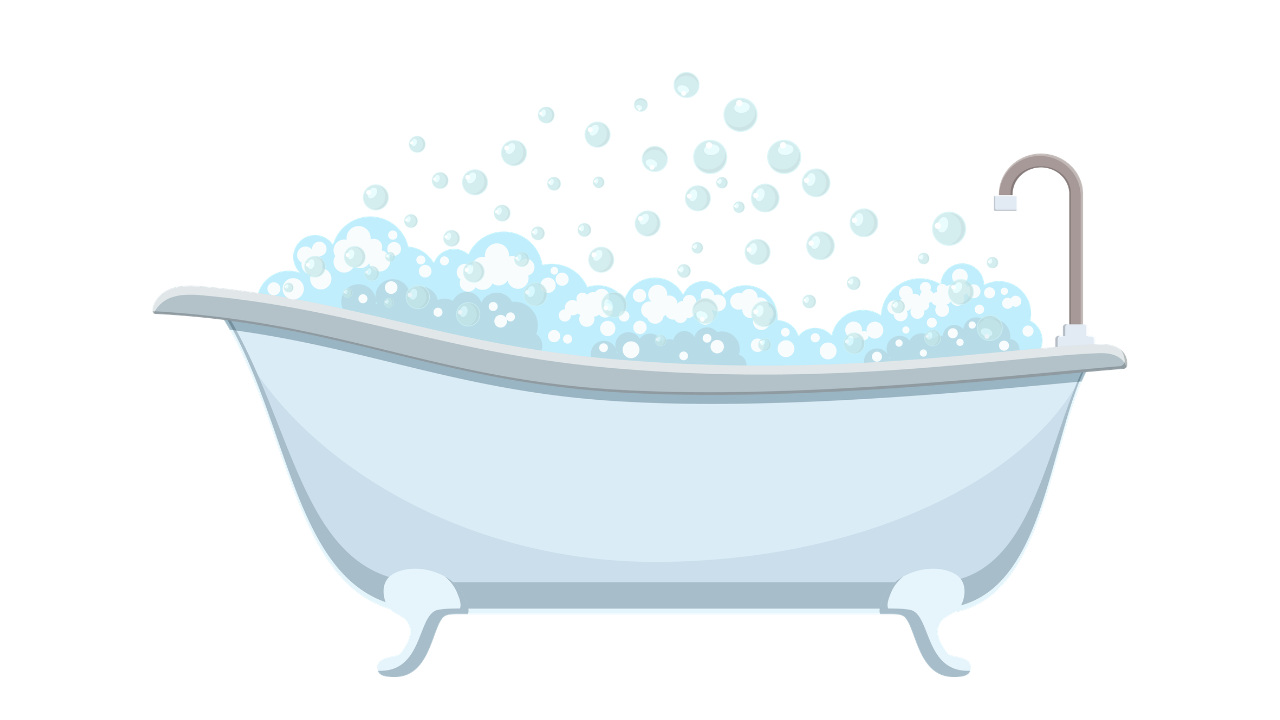
Everyone has a bathtub. And it’s being filled with water (histamine we consume in foods and histamine we produce in the body).
But for some women, the drain gets blocked.
The bathtub is not emptying as it should.
For years yours may have been relatively empty, so a glass of red wine, parmesan and a tomato salad caused absolutely no drama.
Then something changes - your hormones become more erratic, your gut becomes inflamed, you are under enormous stress, you’ve had an infection, your sleep deteriorates, perhaps alcohol has crept up a little.
Suddenly that same meal is being poured into a bathtub that is already close to overflowing.
And this is where midlife becomes particularly interesting.
Why can histamine become more noticeable in perimenopause?
Histamine and our sex hormones talk to each other.
Mast cells have receptors for sex hormones, and oestrogen can influence mast-cell activity and histamine release. During perimenopause, oestrogen isn’t simply “low”. It can fluctuate dramatically, sometimes climbing very high before dropping again.
That hormonal turbulence can change how reactive your system feels.
At the same time, progesterone, the hormone that normally rises after ovulation, often becomes less reliable as ovulation becomes less consistent.
So we can end up with a very different hormonal environment from the one our immune system has been accustomed to for the previous 20 or 30 years.
This relationship is complex and we’re still learning a lot about it, but there is good biological evidence that sex hormones influence mast-cell behaviour.
This is one reason why a woman might first notice histamine-type symptoms in her 40s despite never considering herself “histamine intolerant” before.
But hormones are only one piece of it.
The other really important piece is clearance.
One of the main enzymes responsible for breaking down histamine from the gut is called DAO (diamine oxidase).
DAO is produced largely by the cells lining our intestine.
And this matters.
Because if the intestinal lining is irritated, inflamed or damaged, our capacity to deal with dietary histamine may become lower.
Histamine is also broken down inside tissues through another pathway involving an enzyme called HNMT.
So when I work with someone who appears to have developed histamine problems, I’m rarely asking only:
“Which foods contain histamine?”
I’m much more interested in:
“Why has her tolerance changed?”
What is happening in her gut?
Has there been an infection?
Is there significant dysbiosis or inflammation?
What medications is she taking?
How much alcohol is she drinking?
Is her diet providing the nutrients required for normal enzyme function?
What is happening hormonally?
How stressed and sleep-deprived is she(stress is another major activator of mast cells, user stress they can start producing bucketloads of histamine)?
Is her immune system being constantly stimulated by something else?
Because these things can change the size of your histamine bucket considerably.
DAO activity can be affected by gastrointestinal health, genetic variation, certain medications and alcohol, amongst other factors. DAO itself is produced by mature intestinal cells, which is why gut health deserves a much bigger place in this conversation than it often gets.
So what does histamine trouble actually look like?
This is partly why it gets missed.
Histamine receptors are found all over the body, so symptoms can look completely unrelated.
For one woman it is migraines.
For another, diarrhoea every time she drinks wine.
For someone else, palpitations, flushing and feeling strangely anxious after certain meals.
You might see:
• headaches or migraines
• flushing or feeling suddenly hot
• itching, hives or skin rashes
• nasal congestion or a constantly runny nose
• palpitations
• dizziness
• digestive pain or cramping
• bloating
• diarrhoea
• nausea
• disturbed sleep
• symptoms that become noticeably worse around certain points of the menstrual cycle
And importantly, none of these symptoms automatically mean “histamine intolerance”.
There are plenty of other things that can cause them, which is why I’m never a fan of diagnosing yourself from an Instagram checklist.
And this brings me to low-histamine diets.
A low-histamine diet can be incredibly useful.
Sometimes dramatically so.
If someone is highly symptomatic, temporarily lowering the amount of histamine coming in through food can give the system some breathing room.
That might mean temporarily reducing things such as aged cheeses, cured meats, fermented foods, alcohol and certain other high-histamine foods.
But please hear this part:
A low-histamine diet is not supposed to become your personality.
And it is not the long-term solution.
The evidence around histamine content in foods is surprisingly inconsistent, and many of the giant “foods you must never eat” lists circulating online are far more definitive than the science actually allows.
I see women cutting out more and more food until they are frightened of half the supermarket.
That is not where I want you to end up.
Restriction can sometimes help us lower the bathtub while we investigate.
But ultimately I want to know:
Why is the bucket overflowing in the first place?
And can we increase your capacity again?
That may mean working on the gut.
Supporting intestinal integrity.
Addressing dysbiosis or another source of inflammation.
Looking at medications that may be affecting histamine metabolism with your prescriber.
Reducing alcohol (one of major competitors with DAO enzyme, take this one seriously).
Making sure the diet is nutritionally adequate.
Understanding what is happening hormonally.
Looking at sleep, stress and nervous-system load.
And then, wherever possible, reintroducing food and expanding the diet again.
That, to me, is the difference between symptom management and actually understanding physiology.
Histamine is not the villain.
Tomatoes are not the villain.
Your body has not suddenly become difficult.
Something has changed in the relationship between histamine coming in, histamine being released, and your capacity to clear it.
And particularly in midlife, that relationship deserves investigation rather than another lifetime ban on parmesan.
While you are investigating, you may find these supplements useful to help you empty that bathtub faster and reduce symptoms:
HistaGest (can be taken pre meals to help clear histamine away)
https://naturaldispensary.co.uk/histagest-dao-60s
HistaQuel (often, my go to with clients, a well-rounded histamine clearance formula):
https://naturaldispensary.co.uk/histaquel-120s
You may also look at simple quercetin, that supports clearing processes:
https://naturaldispensary.co.uk/8_quercetin-complex-90s
Natural Dispensary discount code is OBND2026
You may also find foods rich in quercetin very helpful on a daily basis:
capers, red/yellow onions, apples with the skin, berries, cherries, red grapes, kale, broccoli, rocket, asparagus and buckwheat - all of these good histamine clearance support. Lots of space for experimentation here.
Hope that gives you a little insight into the whole big subject of histamine and a couple of useful first steps.
If your health feels complicated and you’re not quite sure what to do with all the pieces, I can help you make sense of it - clearly, practically and with a lot of care along the way.
Let's stay in touch!
According to many of my subscribers, Spoonful Of Health is the only newsletter they read in full and are really looking forward to. Because it is actually not a newsletter, but rather me taking you on a journey of female wellbeing in every form it takes.
PS: I don't spam, sign up with confidence.
